We offer a wide range of kayak carriers, along with carriers for other water sports equipment. This guide explains the different styles available to help you choose the best option for your kayak, vehicle and loading requirements.
All our kayak carriers fit onto roof bars, and we offer a range of bars for most vehicles. Click the link below to select your car and view the available options.
[Click here to find roof bars for your vehicle.]
Where possible, we recommend choosing longer roof bars that extend beyond the feet, rather than shorter, flush-fitting bars, as these generally make loading kayaks easier. You’ll also need to check that the kayak carrier you choose comes with fittings compatible with your roof bars.
We recommend using a cockpit cover when transporting your kayak to prevent rainwater from collecting inside. If a kayak fills with water, the additional weight can seriously overload your roof bars and vehicle roof, as well as make unloading much more difficult. This is particularly important when using saddle-style carriers or load-assist carriers.
Types of kayak carrier
The three most common types of kayak carrier are stackers, J-cradles and saddles. Each has its own advantages, depending on how many kayaks you need to carry and how easy you want loading to be.
Kayak stackers
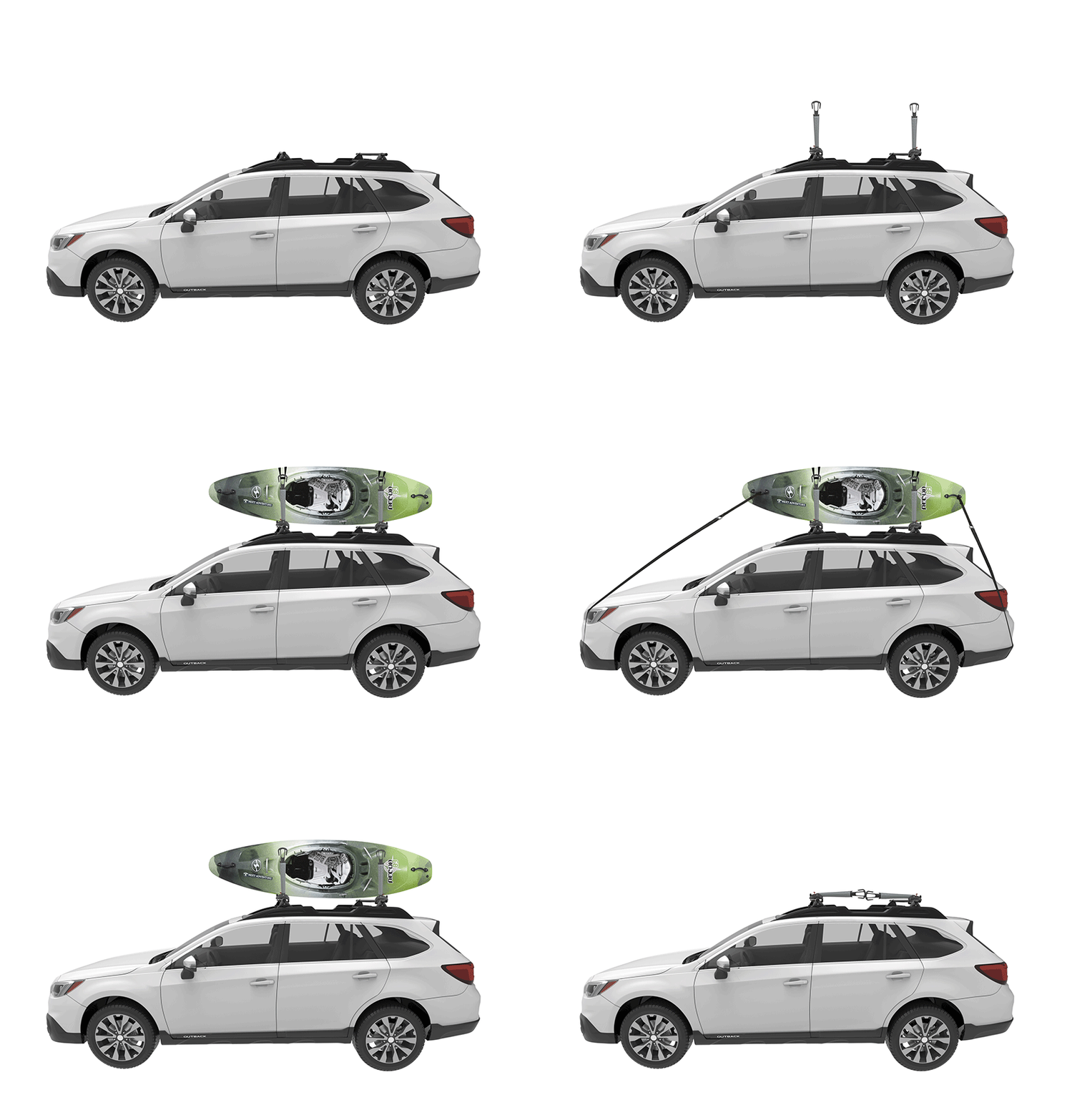
Stackers are usually the most economical option, particularly if you need to transport two or more kayaks.
The kayak is secured on its side against an upright support, allowing you to carry a kayak on either side of the carrier. This makes stackers one of the most space-efficient ways to transport kayaks.
Stackers can be an ideal choice if you need to carry multiple boats. Depending on the length of your roof bars and the permitted load capacity of your bars and vehicle roof, it may even be possible to carry up to four kayaks.
J Cradles
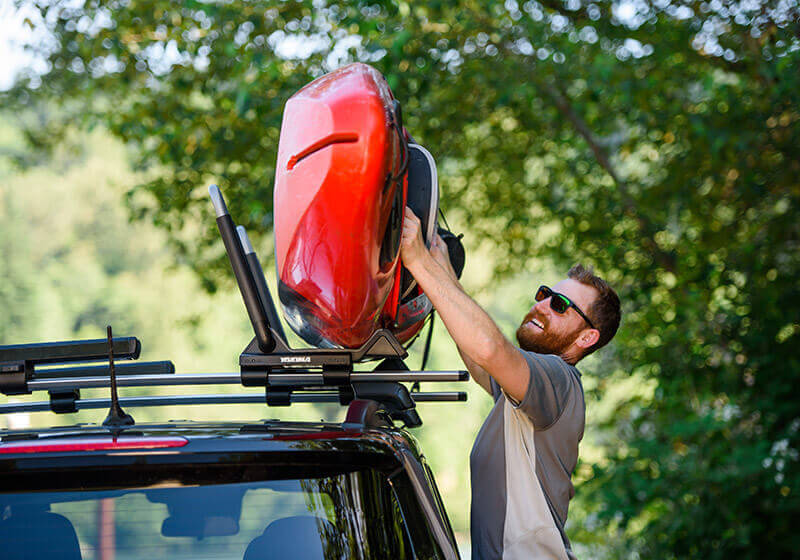
J-cradles hold the kayak at approximately a 45-degree angle, helping to save space across the roof. The kayak is loaded from the side of the vehicle, making this style particularly suitable for smaller or lighter boats.
The cradle supports the kayak while you secure it with straps, which can make loading easier than using a stacker. J-cradles are also a good option for smaller cars, where loading a kayak onto a flat saddle may be more difficult.
Most vehicles can accommodate two J-cradles, allowing you to carry two kayaks, provided there is sufficient roof bar space and load capacity.
Some J-cradles can also convert into stackers, giving you extra flexibility if you occasionally need to carry more kayaks. Examples include the Yakima JayLow and Thule Hull-a-Port XT.
Saddles
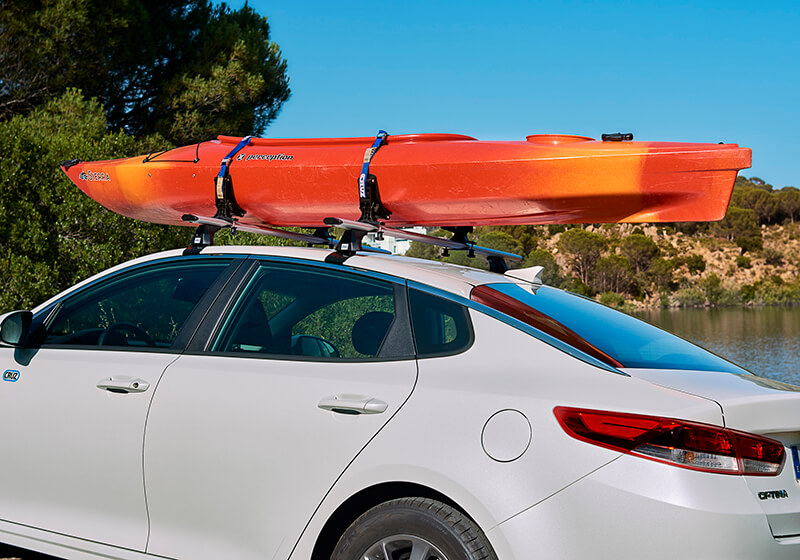
Saddles support the kayak flat on the roof. Although this uses more roof space, the lower-profile arrangement can offer aerodynamic advantages.
Saddles can be easier to load because you can slide the kayak onto the roof from the rear of the vehicle. Depending on the position of your rear roof bar and the design of the carrier, you may be able to rest the kayak on the rear saddle before pushing it forward into position.
Some models include integrated rollers to make loading easier. One example is the Yakima SweetRoll.
Depending on the length of your roof bars, you can usually fit one or two kayak saddles on your vehicle.
Lift-assist kayak carriers are also available
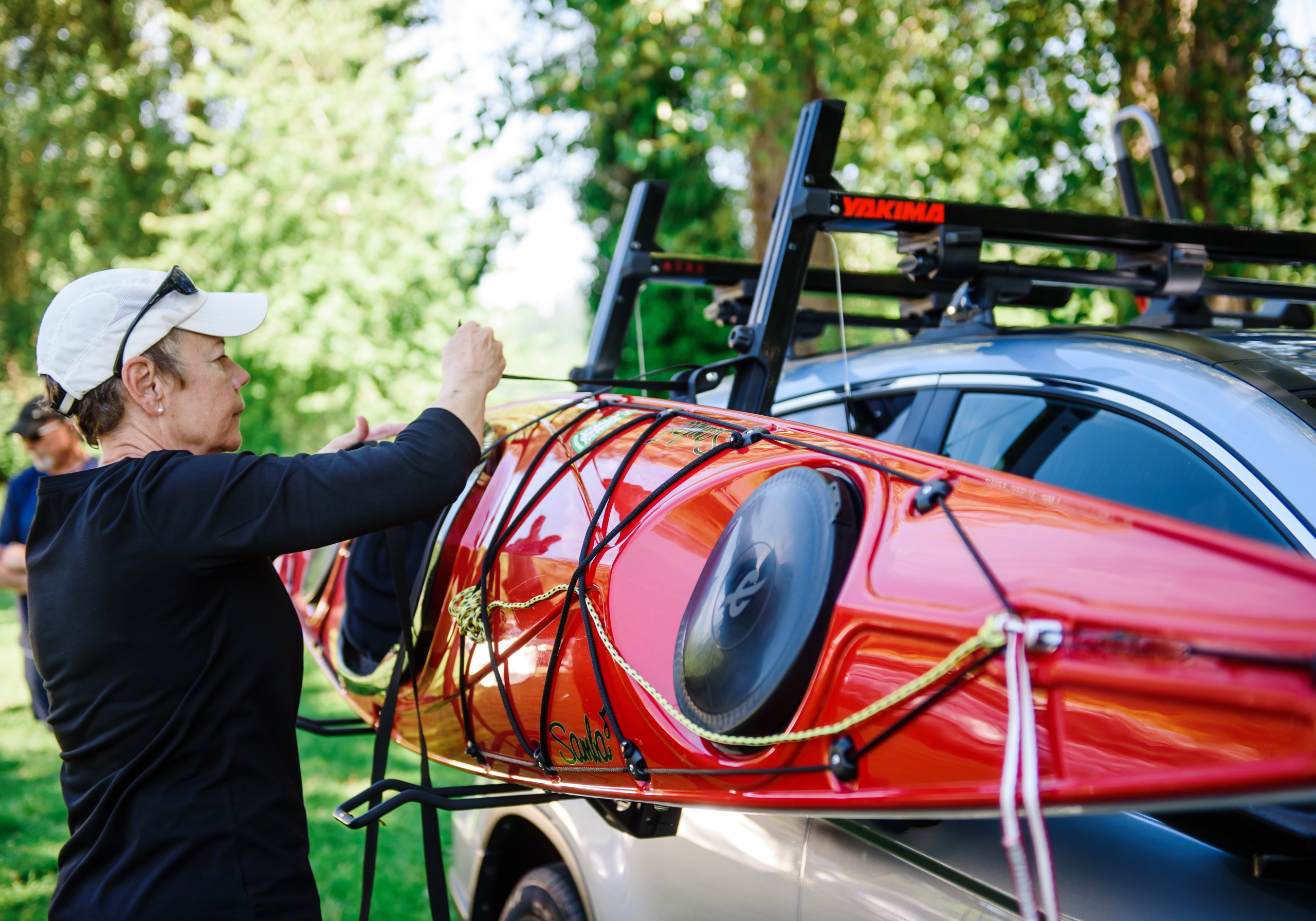
If you find it difficult to lift a kayak directly onto your roof, a lift-assist carrier could be an excellent solution.
Examples include the Yakima ShowDown and Thule Hullavator Pro. These carriers lower down the side of the vehicle, allowing you to load the kayak at a more manageable height before raising it onto the roof.
They can make a significant difference if you regularly load a kayak on your own or struggle with lifting equipment overhead.
However, lift-assist carriers require compatible roof bars, and not every bar system will work with them. Check compatibility carefully before choosing this type of carrier.
Which type should you choose?
- For the most economical option or carrying multiple kayaks: Choose a stacker.
- For carrying one or two kayaks while saving roof space: Consider J-cradles.
- For a low-profile setup and easier rear loading: Consider saddles, particularly models with integrated rollers.
- For easier loading without lifting the kayak overhead: Look at lift-assist carriers.
Whichever option you choose, make sure the carrier is compatible with your roof bars and that the combined weight of the bars, carrier and kayaks stays within your vehicle's roof load limit.